


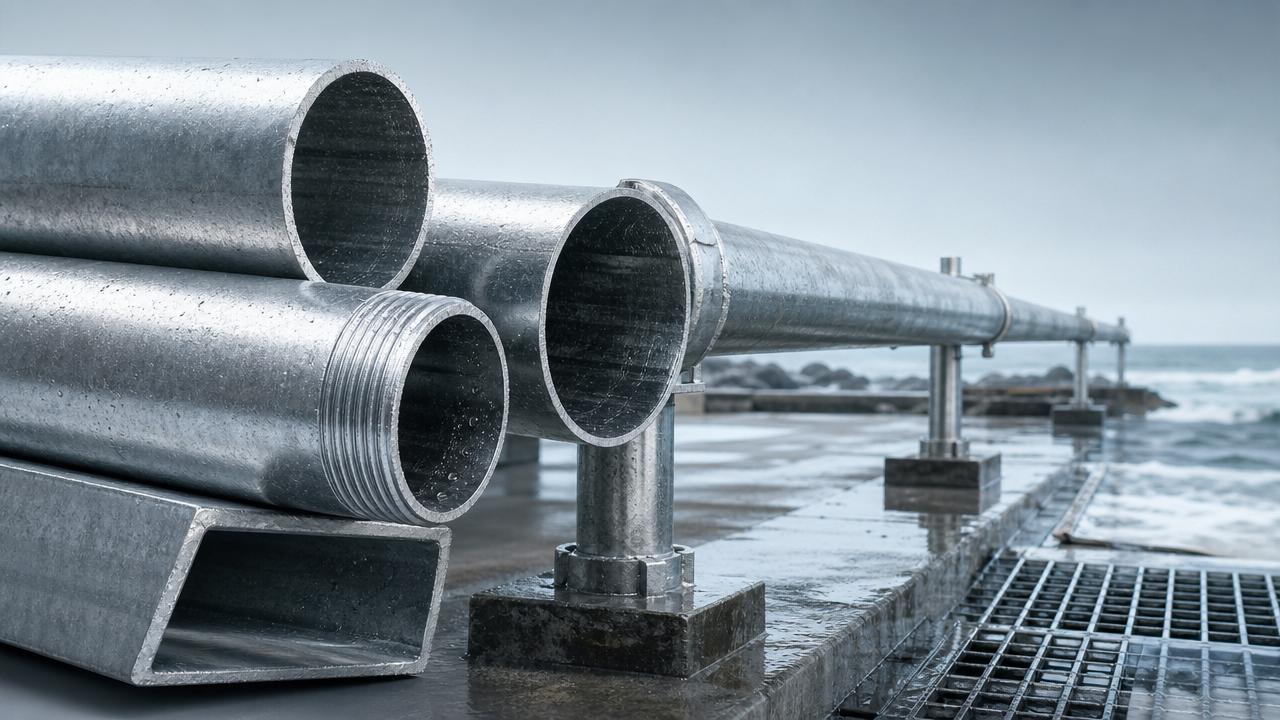
Understanding hot dipped galvanized pipe lifespan starts with the zinc layer, but service life never depends on coating alone. Steel chemistry, fabrication quality, exposure conditions, drainage design, and maintenance all work together. When these variables are reviewed as a checklist, durability becomes easier to estimate, compare, and improve across structural, water, agricultural, and outdoor support applications.
Why a Checklist Matters for Hot Dipped Galvanized Pipe Lifespan
Many corrosion discussions stay too general. In practice, a pipe may last decades in one location and deteriorate far faster in another. That is why hot dipped galvanized pipe lifespan should be judged through a structured review, not a single number.
A checklist helps separate marketing claims from service conditions. It also reduces mistakes during material selection, installation, and inspection. For steel and section applications, this method is more useful than relying only on nominal standards or broad lifespan estimates.
Core Checklist: What Affects Service Life Most
- Check zinc coating thickness against the intended environment, because heavier coatings usually provide longer sacrificial protection in outdoor, humid, industrial, or coastal exposure.
- Verify coating uniformity over welds, edges, threads, and cut ends, since thin spots often become the first points of rust initiation.
- Review base steel composition and surface condition before galvanizing, because reactive steel can change coating structure, adhesion, and final corrosion performance.
- Confirm proper surface preparation, including degreasing, pickling, and fluxing, as poor pretreatment often creates bare areas, ash inclusions, or weak bonding.
- Match pipe design to drainage and ventilation needs, because trapped water, mud, fertilizer, or salt deposits can sharply reduce hot dipped galvanized pipe lifespan.
- Evaluate atmospheric category carefully, since rural, urban, industrial, and marine environments corrode zinc at very different annual rates.
- Inspect contact points with dissimilar metals, because galvanic corrosion can accelerate zinc loss when galvanized pipe touches copper, brass, or stainless under wet conditions.
- Control damage during transport and installation, since deep scratches, impact marks, and thread wear expose steel and shorten local service life.
- Consider operating temperature and moisture cycles, because repeated wet-dry exposure, condensation, and heat can change corrosion behavior over time.
- Plan periodic inspection and touch-up work, because early repair of damaged areas is far more effective than waiting for widespread red rust.
How Zinc Thickness Changes Lifespan Expectations
Among all variables, coating mass is usually the easiest predictor of hot dipped galvanized pipe lifespan. A thicker zinc layer provides more sacrificial material before the steel substrate is exposed. That does not mean every heavy coating performs perfectly, but it strongly influences long-term resistance.
Standards define minimum coating levels, yet actual performance still depends on environment. In dry inland conditions, standard galvanizing may support very long life. In marine spray zones or polluted industrial air, even a compliant coating may require added protection or shorter inspection intervals.
Why Environment Often Overrides Material Assumptions
People often ask for a universal service-life number. That approach is risky. The same galvanized steel pipe can perform very differently in a warehouse canopy, roadside barrier, greenhouse frame, or coastal utility support.
Humidity, chlorides, sulfur compounds, airborne dust, and retained moisture all matter. If the pipe surface stays clean and dries quickly, zinc consumption is slower. If deposits remain wet for long periods, corrosion rates rise and hot dipped galvanized pipe lifespan drops accordingly.
Application Notes by Use Scenario
Outdoor Structural and Support Frames
For outdoor frames, handrails, fence posts, and support members, the main concerns are atmospheric corrosion, standing water, and coating damage at assembly points. Design details matter. Openings for drainage and venting can significantly improve long-term durability.
Where appearance also matters, early white rust should be distinguished from structural failure. Surface discoloration does not always mean severe degradation, but persistent wet storage stains indicate moisture problems that deserve correction.
Water Conveyance and Utility Piping
When galvanized pipe is used in certain utility or non-critical water systems, internal and external conditions must be reviewed separately. Internal water chemistry, flow velocity, scaling tendency, and oxygen content can influence corrosion differently from outside weather exposure.
If the application includes threaded joints, those areas deserve special attention. Threads remove some zinc and create exposed edges. Suitable sealing practice and local repair measures can help preserve hot dipped galvanized pipe lifespan at vulnerable connections.
Agricultural and Greenhouse Installations
Agricultural use can be more aggressive than expected. Fertilizer residues, animal waste, constant humidity, and condensation cycles create a demanding environment for galvanized steel. In these settings, cleanliness and drainage are often as important as coating thickness.
Greenhouse structures especially face warm, wet air and chemical exposure. If deposits are allowed to build up on horizontal pipe surfaces, localized corrosion can start earlier. Regular washing and inspection materially improve service life.
Coastal and Industrial Exposure
Salt-laden air and industrial pollutants are two of the strongest threats to hot dipped galvanized pipe lifespan. Chlorides attack protective films, while sulfur-bearing pollutants can raise zinc consumption rates. The closer the pipe is to direct splash or process emissions, the more critical protection becomes.
In severe exposure, duplex systems may be considered. A galvanized base plus compatible paint coating can extend service life well beyond galvanizing alone, especially where maintenance access is difficult.
Commonly Overlooked Risks
Cut Ends and Field Modifications
On-site cutting, drilling, and welding often interrupt the original protective layer. If these areas are left untreated, corrosion can begin quickly. Zinc-rich repair coatings or approved metallizing methods should be applied without delay.
Poor Storage Before Installation
Stacked pipes stored wet with little airflow may develop white rust before service even begins. This does not always destroy performance, but severe storage staining can consume zinc unevenly and undermine confidence in expected lifespan.
Water Traps and Crevices
Crevice conditions are a frequent design mistake. Clamp zones, sleeve interfaces, and low points that trap water stay wet longer than open surfaces. These localized zones can fail much earlier than the rest of the pipe.
Incorrect Metal Pairing
When galvanized pipe contacts a more noble metal in the presence of moisture, galvanic action may consume zinc faster. Isolation washers, sleeves, or coatings are simple preventive steps that are often missed.
Practical Execution Tips
- Specify coating requirements by environment, not by habit, and ask for documented galvanizing standards, inspection records, and coating thickness results.
- Design assemblies to shed water quickly, keeping horizontal surfaces minimal and avoiding sealed details that retain internal condensation.
- Protect pipes during loading, cutting, threading, and erection so the zinc layer remains continuous at high-contact handling points.
- Inspect installed systems at predictable intervals, focusing on weld zones, threaded ends, supports, splash areas, and dirt-retaining connections.
- Use touch-up materials compatible with galvanized coatings whenever field damage exposes bare steel or significantly thins the zinc layer.
Summary and Next Steps
Hot dipped galvanized pipe lifespan is shaped most by coating thickness, environmental severity, moisture retention, fabrication quality, and installation damage. No single lifespan figure is reliable without these factors being reviewed together.
The most effective next step is to assess the actual exposure category, confirm galvanizing quality, and inspect details where water or damage can concentrate. With that checklist-based approach, galvanized steel pipe becomes easier to compare, maintain, and specify for long-term service.

By clicking 'Allow All', you agree to the storage of cookies on your device to enhance site navigation, analyze site usage and assist with our marketing efforts. Coo Cookie Notice
Please give us a message
SHANDONG LUBAO METAL GROUP CO., LTD.