


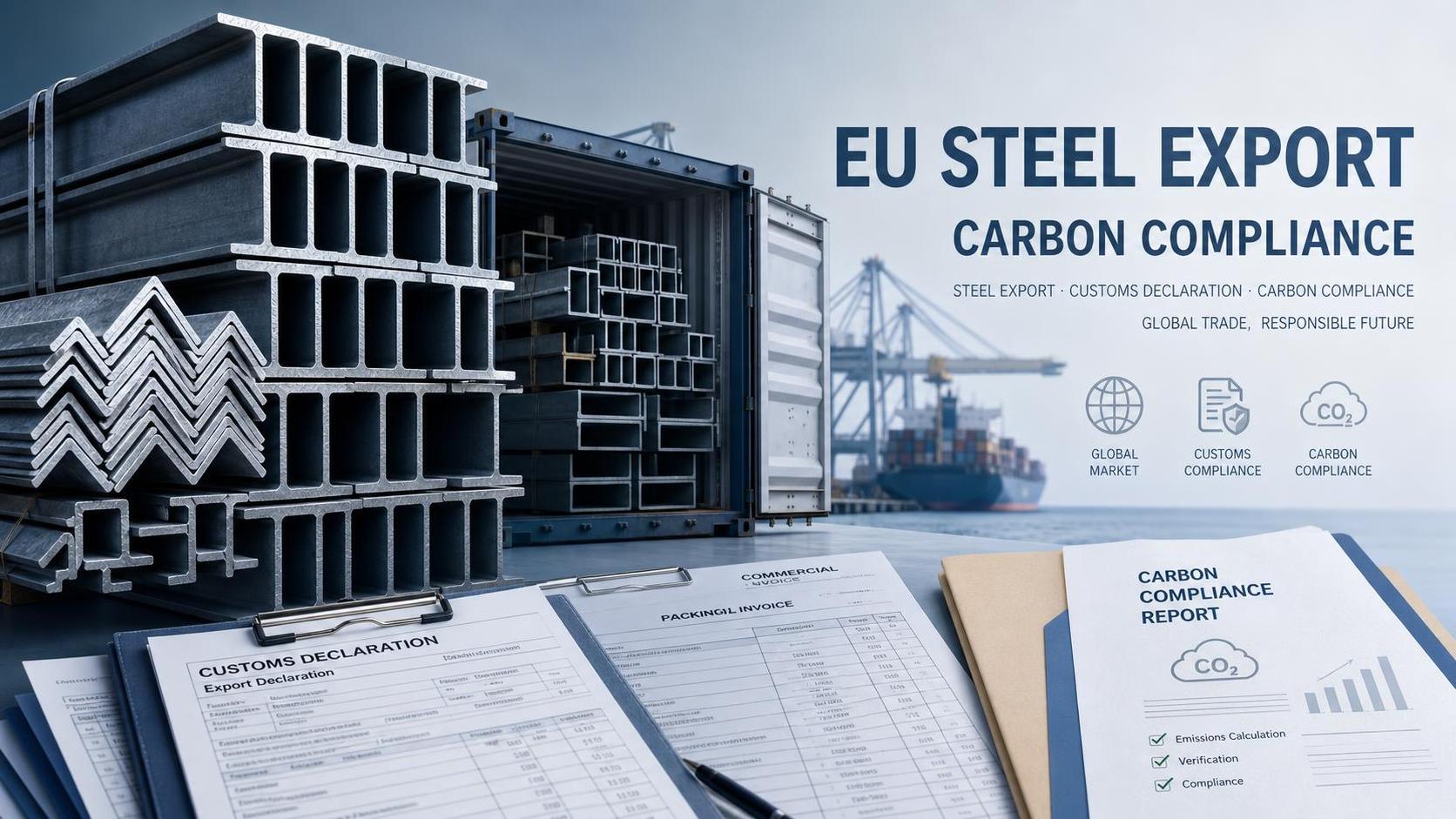
On July 20, 2026, the European Commission put into effect the third-phase transitional rules for CBAM covering steel products, bringing an immediate documentation requirement for steel exports entering the EU. For exporters of hot-rolled sections, H-beams, angle steel and related products, the key issue is no longer only shipment delivery but whether import declarations can be supported by recognized third-party verified embedded carbon emissions intensity data. This development deserves close attention from steel exporters, import compliance teams, supply chain service providers and downstream buyers because it directly affects customs timing and compliance costs.
What Changed on July 20
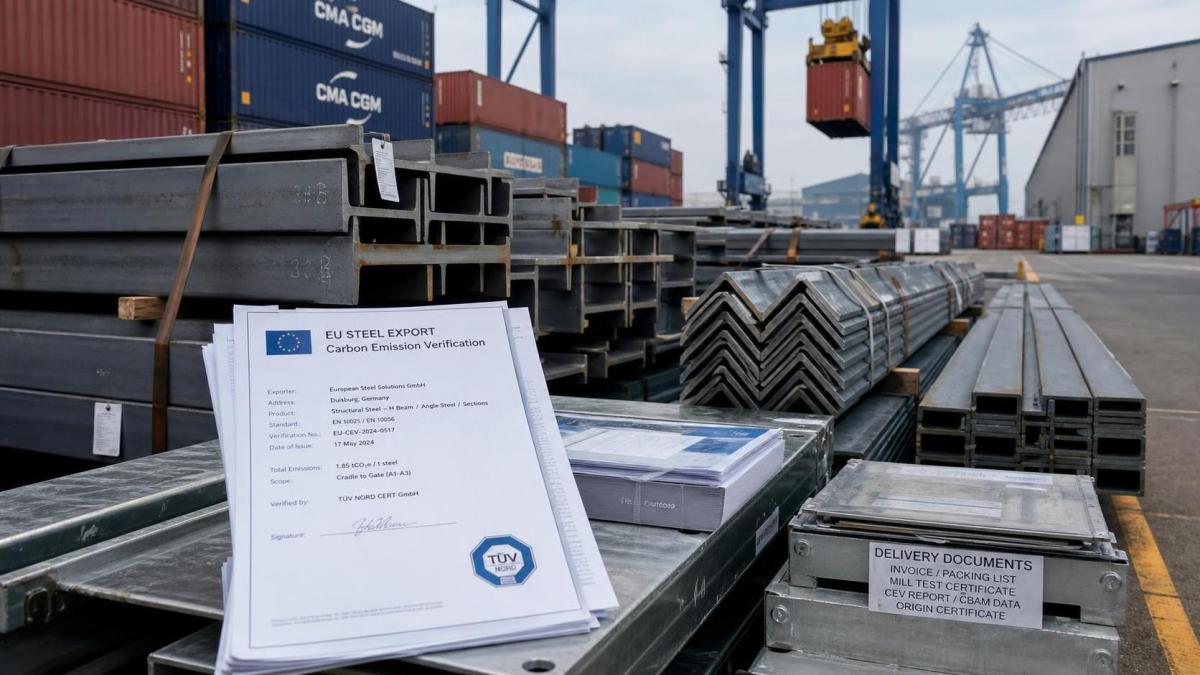
According to the provided information, the European Commission formally implemented the third stage of transitional CBAM rules for steel products on July 20, 2026. From that date, all steel products exported to the EU, including hot-rolled sections, H-beams and angle steel, must submit embedded carbon emissions intensity data at the time of import declaration. The data must be verified by a recognized third party. The new requirement directly affects Chinese section steel exporters through customs clearance timing and compliance cost pressure. Companies that do not meet the requirement may face delayed release or prepayment of additional carbon-related charges.
Where the Immediate Pressure Will Appear
Export-facing steel suppliers
For companies directly shipping section steel products to the EU, the first impact is at the declaration stage. Their exposure comes from the need to provide verified emissions data together with import documentation, which means shipment readiness now depends on both product and carbon data preparedness. What deserves closer attention is whether documentation workflows, verification arrangements and delivery schedules remain aligned under the new requirement.
Processing and manufacturing links serving EU orders
Manufacturers producing hot-rolled sections, H-beams and angle steel for EU-bound business may feel the impact through order execution and customer coordination. From an industry perspective, the issue is not limited to production output; it also extends to whether the required emissions information can move alongside the goods in a form acceptable for import filing. That can affect handover timing, contract execution and communication with trading partners.
Customs, logistics and supply chain service providers
Service providers involved in customs filing, shipping coordination and trade documentation may face greater operational sensitivity. Their work can be affected because incomplete or non-compliant carbon data may delay release procedures or trigger additional payment requirements. Observably, this makes document accuracy and timing more material in cross-border execution for steel cargoes entering the EU.
EU buyers and procurement counterparts
Buyers sourcing these steel products for the EU market may also need to pay closer attention to supplier readiness. The reported risk of delayed customs release or extra carbon-related prepayment means procurement teams may need to focus more closely on whether suppliers can support declarations with verified emissions information, especially where delivery timing is commercially sensitive.
What Companies Should Watch Now
Whether product scope and filing practice match daily operations
The provided information identifies hot-rolled sections, H-beams and angle steel and states that all steel products exported to the EU are covered by the requirement in this context. Companies should therefore focus on whether their actual export product mix and declaration practice are fully aligned with the rule now in force, particularly for shipments already moving into the EU market.
The readiness of verified emissions documentation
The practical issue is not only having emissions data, but having embedded carbon intensity data verified by a recognized third party and available at the import declaration stage. Analysis shows that the timing of verification and the completeness of supporting documents are likely to become central checkpoints in transaction execution.
Delivery schedules and customer communication
Because the new rule is described as directly affecting customs clearance speed and compliance cost, exporters and service teams should pay close attention to delivery commitments, filing timelines and communication with EU-side customers or import agents. The difference between policy wording and operational execution may show up in how quickly shipments can be processed once declarations are made.
Exposure to extra cost and release delays
The provided summary states that companies failing to meet the requirement may face delayed release or prepayment of additional carbon-related charges. From an operational standpoint, businesses should pay particular attention to which orders, customers or routes carry the highest sensitivity to such delays or advance payments.
Why This Looks Like More Than a One-Day Update
Analysis shows that this development should be read as an operational compliance signal rather than a routine policy headline. The immediate fact is the July 20 implementation and the filing requirement for verified embedded carbon emissions intensity data. More broadly, it indicates that for steel products entering the EU, carbon documentation is becoming part of normal trade execution rather than a separate policy discussion. At the same time, it is more appropriate to understand this as a live compliance development that still requires continued observation in day-to-day application, especially in documentation practice, clearance handling and cost pass-through.
How the Market May Best Read This Development
At this stage, the clearest industry meaning is practical: EU-bound steel trade, especially for section steel products, is facing a more document-intensive import process from July 20, 2026. The change should not be overstated beyond the provided facts, but it should not be treated as a minor procedural adjustment either. It is more appropriate to understand this as a near-term operating change with longer-term significance for how exporters, buyers and service providers manage compliance, timing and transaction risk.
Basis of This Article and What Still Needs Verification
This article is based on the user-provided news title, event date and event summary. For this type of industry update, relevant source categories typically include official announcements, company statements, industry association releases, authoritative media reports and standard-setting documents. No specific official source link was provided in the input, so the exact official publication path still needs to be verified on an ongoing basis. Observably, the next points worth tracking are any further official wording, implementation clarifications and market-side handling practices related to customs filing, third-party verification and cost treatment.

By clicking 'Allow All', you agree to the storage of cookies on your device to enhance site navigation, analyze site usage and assist with our marketing efforts. Coo Cookie Notice
Please give us a message
SHANDONG LUBAO METAL GROUP CO., LTD.