


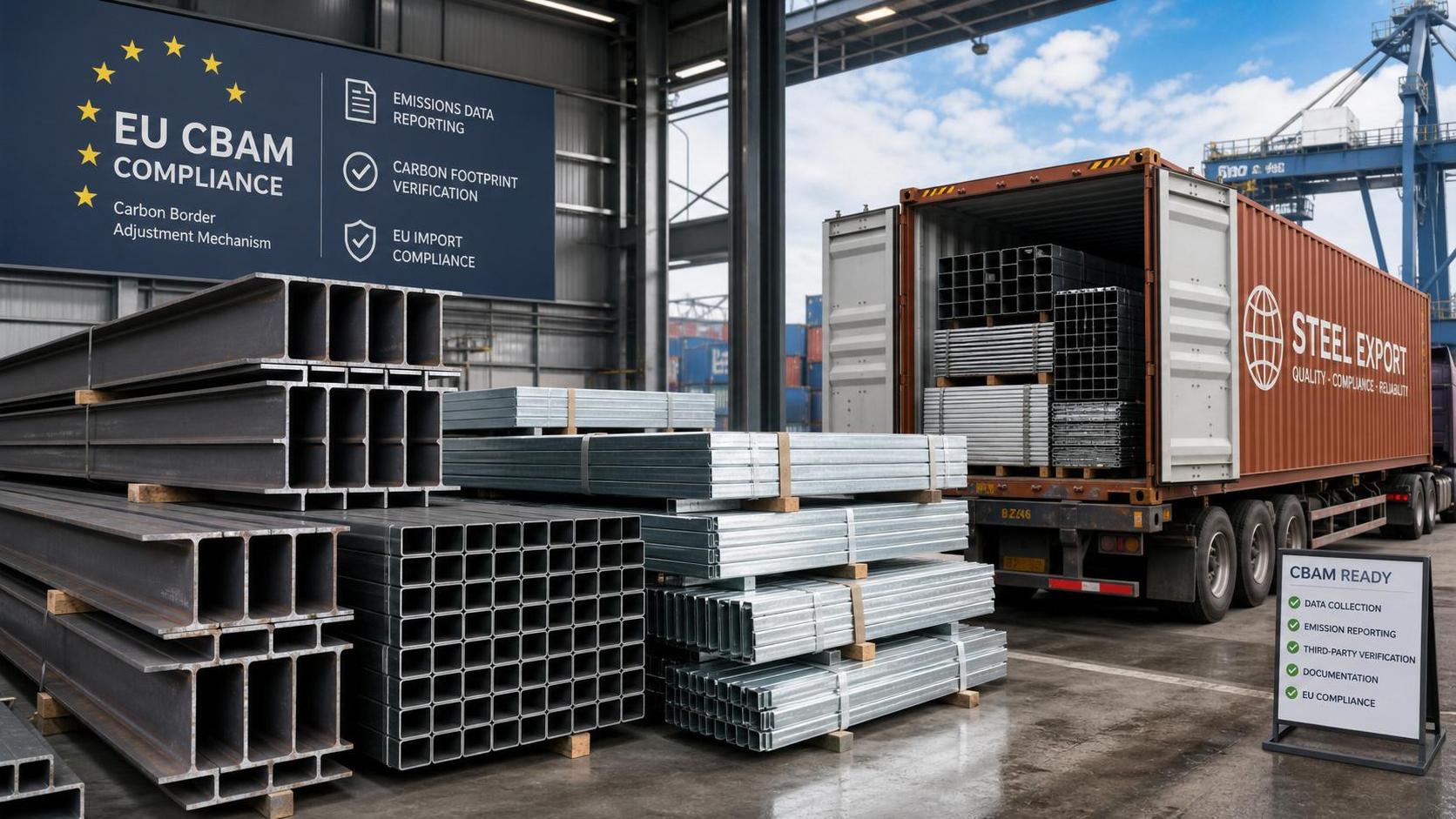
On July 18, 2026, the European Commission formally moved CBAM for steel into a new implementation stage by bringing imported steel sections into mandatory emissions reporting and carbon cost accounting. For exporters, importers, procurement teams, and delivery planners involved in steel profiles, this is not just a policy headline but an operational change that affects compliance preparation, price formation, and shipment timing.
What the Commission Put Into Effect on July 18
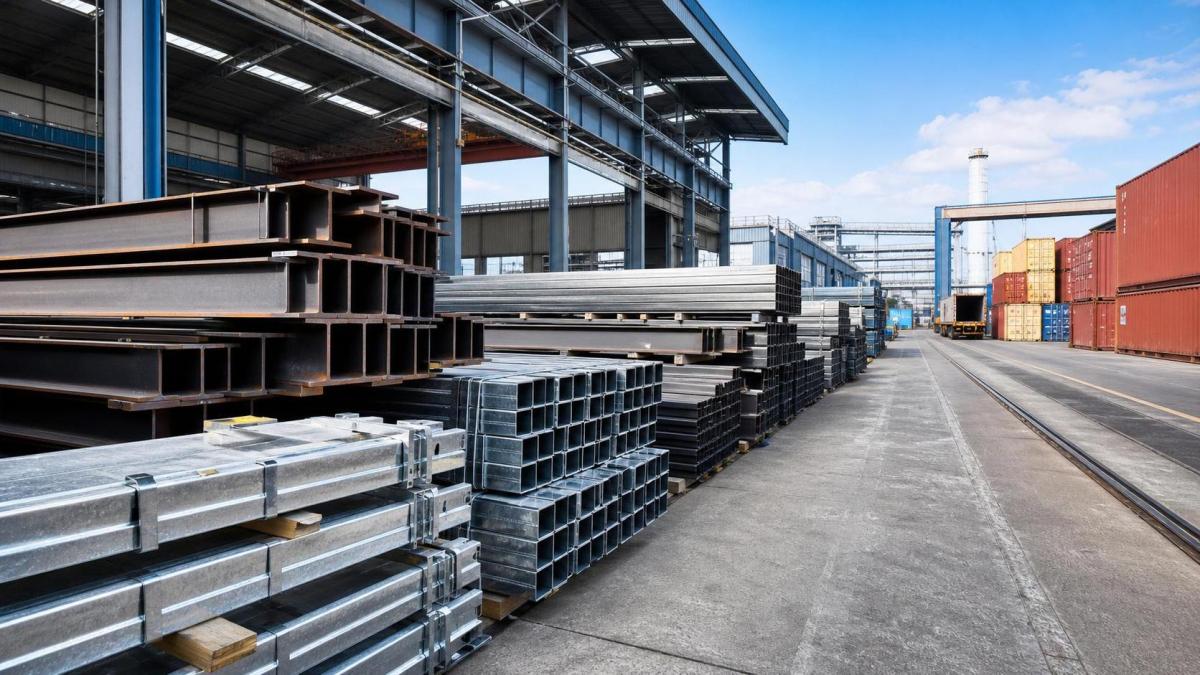
According to the user-provided event summary, the European Commission published Official Journal notice OJ L 198/1 on July 18, 2026 and formally launched the third stage of CBAM. This stage, for the first time, places hot-rolled H-beams, cold-formed rectangular tubes, and structural galvanized sections within the scope of mandatory declaration and carbon cost accounting.
The same summary states that importers must submit quarterly carbon emissions data from that date and make advance carbon-related payments. It also states that the actual carbon tariff will be settled from October 2027 on a per-ton CO2e basis.
The information provided further indicates that the change directly affects compliance readiness, quotation practices, and delivery scheduling for Chinese exporters of steel sections.
Where the Immediate Pressure Falls Across the Trade Chain
Export quotations now face a new cost variable
From an industry perspective, exporters of the covered steel section products are likely to feel the impact first in quotation and contract preparation. Because the new stage combines mandatory reporting with advance carbon-related payments, pricing discussions may need to account for carbon cost exposure earlier than before. What deserves closer attention is whether commercial terms, product descriptions, and supporting technical documents are aligned well enough to avoid disputes over product scope and carbon reporting responsibility.
Import-side compliance becomes part of order execution
Importers appear to move into a more active compliance role under the reported change, since quarterly emissions submissions and prepayments start immediately. Analysis shows that this can affect order execution, not only customs or finance processes. Purchase scheduling, document collection, and internal review cycles may all need tighter coordination where covered steel sections are involved.
Supply chain coordination may tighten around documents and timing
For manufacturers, processors, traders, and logistics-linked service providers, the practical effect is likely to show up in information handover. Observably, once carbon declarations and prepayments become part of the transaction flow, shipment timing and document readiness become more closely linked. Companies handling these product categories may need to pay closer attention to emissions-related records, technical specifications, and delivery milestones tied to each order.
What Companies Should Watch Now
Product scope needs immediate internal review
Analysis shows that the first priority is to confirm whether shipped or quoted items fall within the newly covered categories named in the event summary: hot-rolled H-beams, cold-formed rectangular tubes, and structural galvanized sections. Where product classification or specification language is unclear, the risk is less about theory and more about later compliance friction.
Quarterly reporting support should be built into transaction files
What deserves closer attention is the documentation chain behind quarterly carbon emissions submissions. The input does not provide detailed filing requirements, so it is more appropriate to understand this as a signal to organize supporting records early rather than as a fully defined checklist. Exporters and their counterparties should pay attention to how technical files, emissions-related data, and trade documents are prepared and retained for covered shipments.
Commercial terms may need adjustment before 2027 settlement begins
Because advance payments start now while final carbon tariff settlement is scheduled from October 2027, companies may need to review how they handle quotations, price validity, and delivery commitments over a longer execution window. This is an analytical observation, not a confirmed rule outcome, but the timing structure alone suggests that cost allocation and contract wording deserve closer scrutiny.
Delivery planning should account for compliance sequencing
The event summary directly links the policy move to order delivery rhythm. Observably, companies should watch whether reporting obligations and payment sequencing create additional checkpoints before shipment completion or order closeout. In the absence of more detailed execution guidance in the input, this remains an area for ongoing monitoring rather than a settled conclusion.
Why This Looks Like an Execution Signal, Not Just a Policy Update
Analysis shows that this development is better understood as a live implementation signal than as a distant regulatory discussion. The reason is straightforward: the reported obligations start immediately for quarterly emissions data submission and prepayment, while the tariff settlement mechanism already has a stated future date. At the same time, it would be premature to treat all operational consequences as fixed, because the input does not include detailed enforcement interpretations, documentation standards, or transaction-level review practices. That is why market participants still need to watch how the rule is applied in practice.
How to Read the Change at This Stage
It is more appropriate to understand this event as a confirmed compliance and trade execution change for covered steel section products, with further practical details still requiring observation. The immediate significance lies in the shift from general policy discussion to product-specific reporting and carbon cost obligations. For the industry, the most rational reading is that compliance preparation, quoting discipline, and delivery coordination now matter earlier in the transaction cycle, while the full market response and execution detail still need to be tracked carefully.
Basis of This Article and What Still Needs Verification
This article is generated from the user-provided news title, event date, and event summary. For developments of this type, relevant source categories usually include official notices, regulatory releases, customs or trade authority information, industry association updates, standard-setting documents, and reporting from authoritative media. A specific official source link was not provided in the input, so it still needs to be verified on an ongoing basis. Further observation is also needed regarding detailed policy interpretation, certification or compliance implementation approaches, tender document changes, market feedback, and how companies execute the new requirements in practice.

By clicking 'Allow All', you agree to the storage of cookies on your device to enhance site navigation, analyze site usage and assist with our marketing efforts. Coo Cookie Notice
Please give us a message
SHANDONG LUBAO METAL GROUP CO., LTD.